
Suit Shop Billing Software for Stitched & Unstitched Suits
HisabLekha is a billing option for Indian suit shops that track stitched suit styles with size-colour variants, barcode-counted unstitched sets, GST invoices, customer balances, returns, and fabric by roll or metre.
Recent product workflows
Suit-shop billing proof for unstitched suits
See customer footage of unstitched-suit barcode labels, then compare counted suit stock with the separate roll-and-metre workflow for fabric sold by length.
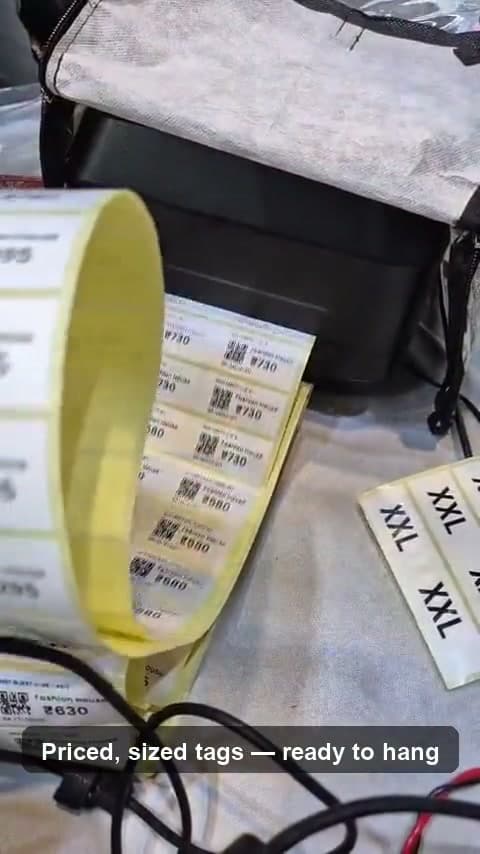
Barcode labels for unstitched suits
Published customer footage shows a large batch of unstitched-suit styles selected at once, a print preview displaying 153 labels in a continuous roll, then priced and sized barcode tags printed from Barcode Studio. The number refers to labels, not distinct styles.
Watch the unstitched-suit label footageFabric stock by roll and metre
For fabric sold by length, review the separate roll workflow for opening metres, cuts, and remaining balance.
See fabric inventory workflowsWhat does HisabLekha handle for this shop type?
HisabLekha is billing software for Indian suit shops that sell stitched suit styles with separate size-colour variants, packaged unstitched sets by count, and fabric by the metre. It connects each sellable variant or package to its barcode, GST bill, stock movement, and customer balance, with a separate roll-and-metre workflow for fabric. Test returns, exchanges, and the shop's printer and scanner with real stock. Confirm component deductions for multi-piece sets in a live demo.
Track each stitched suit style through its sellable size-colour variants; scan, bill, return, or exchange the exact variant and confirm its stock movement.
Select unstitched-suit styles for barcode labels with price and size; customer footage shows a large batch selected and a continuous-roll print preview with 153 labels. The count is labels, not distinct styles.
Scan a suit's label at billing and confirm the correct sellable item and counted stock update.
Track opening metres, cuts, and remaining balance against a fabric roll when dress material is sold by length.
Create GST invoices and verify the shop's HSN, tax setup, printer, and invoice format before rollout.
Test a return or exchange from the original sale and review the related stock movement and customer balance.
Use estimates and recorded advances for eligible customer orders, then verify the conversion and payment allocation.
How do fashion shop inventory models differ?
The sellable unit changes by shop type. This table shows which product attributes and workflow matter for each category.
| Shop type | Inventory model | Relevant workflow |
|---|---|---|
| Unstitched suit sold as one package | One sellable item, piece count, and barcode | Test whether the software can search the shop's design code, colour, pattern, or fabric/material; then scan, bill, and confirm the item count changes |
| Dress material sold by length | Selected fabric roll with opening and remaining metres | Record a cut and verify the roll balance |
| Stitched suit with size, colour, or fit options | Parent suit style with separate size-colour variants; verify fit or cut separately | Scan a variant, test an exchange, and confirm how fit or cut is recorded and found |
| Multi-piece suit set with components | Set item plus any separately tracked components | Confirm the exact stock deductions in a live demo |
What should a suit shop confirm in a demo?
- Barcode footage proves suit-style label selection and printing; it does not prove component-level stock deduction for a multi-piece suit set.
- The published stitched-suit workflow describes size-colour variants. If fit or cut should be a separate stock attribute, add one real suit and verify staff can record and search it, then check which design code, shade or colour, pattern, fabric type or material, fit, and set details appear on the barcode label and invoice.
- If a suit is sold as a set of separate fabric components, verify the exact stock model in a live demo instead of assuming bill-of-material automation.
- The fabric roll-and-metre workflow is for fabric sold by length. Confirm the shop's cut, remnant, and return practices before migration.
FAQ
Frequently asked questions about Suit Shop Billing Software for Stitched & Unstitched Suits
Can HisabLekha track stitched suit styles by size and colour?
Can a suit shop track fit or cut options separately?
Can HisabLekha bill unstitched suits?
Can HisabLekha print barcode labels for unstitched suits?
Can a suit shop track fabric by metre and roll?
Does one suit-set sale reduce the stock of each fabric component?
How much does billing software cost for an unstitched-suit shop?
What should I check before using suit-shop billing software for GST?
Related fashion-retail workflows
Explore another documented workflow that may fit the next stock, shop, or channel question.
Test billing with your suit-shop stock
Bring one barcode-tagged suit package and, if relevant, one fabric roll. Verify the GST bill, return or exchange, metre balance, printer, and scanner; confirm any component-level deductions in the demo.
No credit card · Cancel anytime · Test your workflow first
HisabLekha Technologies Private Limited · Made in India · support@hisablekha.com