
Suit retailers may stock ready-made suit styles as size-colour variants, packaged unstitched sets as counted pieces, and dress material cut from rolls by the metre. Compare each sellable unit separately: scan and exchange one stitched variant, bill and return one packaged set, and record a cut from the selected roll. HisabLekha's suit-shop billing workflow documents barcode lookup, GST invoices, counted stock, customer ledgers, and supported returns or exchanges, alongside a separate roll-and-metre workflow for fabric sold by length.
What is the best billing software for a suit shop in India?
Start with the stock the shop sells and the counter setup it needs; no single product fits every suit retailer. If the shop takes custom orders or alterations, test its measurement records and job tracking too. These options are a starting shortlist based on each vendor's published pages, not side-by-side product testing:
The best billing software for an unstitched-suit shop should track each packaged suit as a counted item, link its barcode to the bill, and apply returns to the correct stock record. If the shop also sells fabric by length, verify roll balances separately; a barcode alone does not prove component-level deductions for a multi-piece set.
- Mixed suit and fabric stock: Include HisabLekha when the shop needs stitched size-colour variants, counted unstitched packages, and fabric tracked by roll or metre. Demo exact exchanges, returns, cuts, and any component deductions.
- Garment-specific counter workflows: Compare Accountune for cloud variant stock or KOSH for its published offline Windows workflow. Verify package counts and metre cuts.
- Broad garment inventory: Compare TallyPrime, Vasy, or MargBooks against the shop's variant, branch, and barcode needs.
- General or free POS options: Compare Vyapar, myBillBook, and Loyverse; confirm plan limits, India invoice needs, label printing, and suit-specific stock behavior.
The detailed vendor table below separates public feature claims from the suit-set, return, metre-cut, hardware, and plan checks a shop should demonstrate.
What should the best suit-shop billing software prove?
Ask each vendor to demonstrate one real product from stock entry through billing and a return. The exact sellable unit should stay attached to its barcode, invoice, stock movement, and customer balance.
For a quick manual check, use the suit and fabric stock-count worksheet below. It calculates an expected balance in pieces or metres from opening stock, receipts, sales or cuts, and recorded returns; compare that with a physical count.
| What the shop sells | Stock record to test | What to verify in a demo |
|---|---|---|
| One packaged unstitched suit | A counted product item with the shop's design or catalogue code, shade, and own barcode; searchable pattern or fabric type if staff need them | Scan the label, complete a bill, and confirm that the right item count changes. |
| Dress material sold by length | A selected fabric roll with opening and remaining metres | Record a cut and check that the same roll shows the correct balance. |
| Stitched suits with size, colour, or fit options | A parent suit style with separate size-colour variants; verify whether fit or cut needs its own stock value | Scan a variant, test a size exchange, and confirm how fit or cut is recorded, searched, and shown on the label or bill. |
| Stitched suit sold as a jacket-and-trouser set | The sellable set and any separately tracked piece variants or components | Bill or exchange the pairing and confirm whether the set, each piece, or both stock records change. |
Use the design or catalogue code shop staff already recognize. If staff need to search by pattern, shade or colour, fit or cut, or fabric type, ask each vendor to show whether those details can be recorded and found, and whether the required description appears on the label and invoice. Treat those fields as vendor-specific until the demo proves the shop's workflow. If supplier lot or batch identity matters, check whether receiving, sale, and return preserve that reference; a barcode on a style does not prove lot-level tracking. Then scan the code, check the invoice description and GST details, and confirm whether stock changed by suit piece, separate component, or metre cut.
How should stock codes distinguish variants, sets, and fabric?
If a retailer uses GS1 GTINs, each product variation needs its own GTIN. For apparel, a size, a colour, or a specific size-and-colour combination counts as a variation. GS1's General Specifications distinguish a pre-pack ordered together but sold as separate items, a multi-pack sold intact as one consumer unit, and a set-pack whose pieces can also be sold individually. For a suit sold together as one trade item, GS1 also defines the Individual Trade Item Piece (ITIP) identifier for a piece that is not traded independently; GS1 cites a suit's jacket and trousers as an example. Fabric sold in variable lengths is a variable-measure trade item; for retail checkout, GS1 says the barcode must include either the price or quantity. As of this guide's 4 October 2026 review, GS1 lists version 26.0.0, published January 2026, as current in its General Specifications archive. These rules identify products, packs, pieces, and variable data; they do not specify how billing software changes a retailer's stock balance. In a demo, scan the shop's actual suit set, process a return, and record a metre cut to verify those stock movements. See GS1's size-colour guidance, the current GS1 General Specifications, the GS1 change notice on multi-piece trade items, and its variable-measure explanation.
Does suit-shop software cover stitched suits and alterations?
If the shop sells stitched suits, test jacket-and-trouser pairings and the exact size-colour units. If it accepts alteration work, test the garment, work description, promised date, tailor assignment, status, customer measurements, optional charge, printable slip, and link to the sale. HisabLekha documents an online-only alteration workflow with saved-customer versioned measurements and printable slips; its published scope does not claim full custom-tailoring production planning. Review the alteration workflow and confirm the shop's process in a demo.
How did we compare suit-shop billing software?
We reviewed the linked vendor product and pricing pages on 3 October 2026, then checked Hitech Billsoft's garment and pricing pages, Vasy's garment and pricing pages, Loyverse's inventory and pricing pages, and the Vyapar and myBillBook free-plan pages on 4 October. A feature appears in the table when the vendor's public page describes it; where a page does not explain suit-component deductions, metre cuts, or return behavior, we list those as demo questions. Prices are dated snapshots and can change.
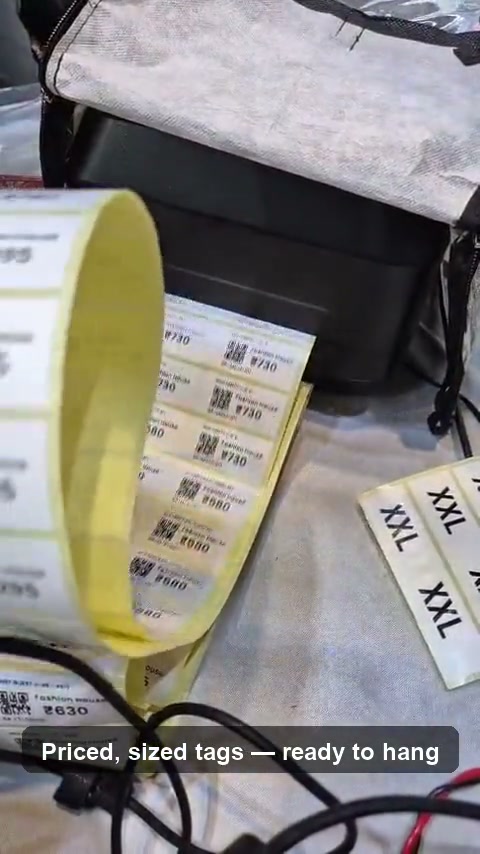
The customer footage demonstrates bulk style selection and priced, sized barcode-label printing; it does not establish component-level stock deductions or customer outcomes. Use the demo checklist below with the shop's own suit set and fabric roll.
Detailed vendor comparison for suit-shop billing
This table summarizes each vendor's own public product pages and lists the suit-specific behaviors that still need a live demo. Prices, included features, and plan terms can change; confirm them directly before choosing.
| Software | What its public pages describe | What a suit shop should verify |
|---|---|---|
| HisabLekha | The solution page describes stitched size-colour variants, counted unstitched suit items, and a separate roll-and-metre workflow. Linked customer footage shows batch-selected, priced, sized barcode labels. | Test size-colour variant exchanges, package-count changes after returns, metre cuts, and whether a multi-piece set should deduct each component. |
| Accountune | Its garment page describes size-colour variant stock, barcode tag printing, GST/HSN setup, and returns linked to invoices. Its vendor-published buyer guide says fabric can be billed by metre, bale, or lot alongside readymade pieces. | Ask for a demo of a packaged suit, a multi-piece set, a metre cut, and the remaining balance of the selected roll; the garment page does not document component deductions or roll balances. |
| KOSH | Its garment page describes size-colour inventory, custom barcode hangtags, exchanges, and offline Windows billing. | Test a suit package and any component deductions, then check fabric by roll and metre, backup, scanner/printer compatibility, and support after the first year. |
| Vyapar | Vyapar describes bulk barcode generation and printing, GST billing, stock updates, and return or exchange processing. | Verify size-colour stock, fabric by metre, and any component-level deductions the shop requires. |
| TallyPrime | Tally's garment page describes size, colour, style, and fabric attributes, variant stock, barcode/POS billing, and return credit notes. | Use one actual unstitched set to test the barcode, stock movement, exchange, and fabric-by-length workflow. |
| LOGIC ERP | Its garment-retail page describes POS billing, GST, shade-size-article inventory, customizable barcode generation, returns and exchanges, and multi-outlet operations. | Ask for a demo of one unstitched set and a metre-based fabric cut, then confirm component deductions and the quoted plan. |
| HDPOS Smart | Its garment-store page describes barcode or attribute search by colour, size, and design, garment inventory, offline billing, and tailoring or alteration records. | Test one packaged suit, GST setup, component deductions, and metre cuts; ask for the current India plan and renewal terms. |
| GSTpad | Its garment page describes stock by category, brand, size, colour, material, and design, plus customizable barcode printing and sales returns. | Test the shop's catalogue code, suit-piece count, metre cut, and any component deductions; verify the required plan and hardware. |
| MargBooks | Its cloud billing page lists GST billing, inventory, barcode billing, POS, and web or app access. | Confirm the MargBooks plan, garment fields, barcode-label setup, component deductions, and roll-and-metre cuts. |
| GoFrugal | GoFrugal's garment page describes colour, size, pattern, design, and model attributes, product-specific barcode support, and multi-outlet inventory workflows. | Check the deployment and plan that fit the shop, then test an unstitched set, a return, and metre-based fabric stock. |
| Dataman Vastralaya Retail Pro | Dataman positions Vastralaya for textile, cloth, and saree shops, with barcode billing, style-size-colour inventory, customer loyalty, GST, and multi-location support. | Check catalogue codes and supplier references, suit-set component deductions, roll-and-metre cuts, and the module quote. |
| UdyogBill | Its garments page advertises a size-colour-fit matrix, barcode swing-tag printing, and alteration slips. | Test the shop's unstitched set and metre cuts; confirm which plan includes the required barcode scanner and label-printer workflow. |
| Hitech Billsoft | Its garment page describes GST/non-GST bills for single pieces, sets, and bulk fabric rolls; size-colour-design inventory; and retail/wholesale billing. Its pricing page lists barcode generation and printing under Business. | Test a metre cut from a selected roll, suit-component deductions, and label generation on the quoted plan; confirm printer support and the current license terms. |
| myBillBook | myBillBook describes barcode generation, printing and scanning, GST billing, and stock updates after sales, purchases, and returns; feature availability depends on the platform and plan. | Test the shop's size-colour variants, roll-and-metre cuts, and stock behavior for a multi-piece set. |
| Setuverse | Its retail page lists a garment-shop vertical and advertises offline POS, barcode scanning and label printing, inventory tracking, and GST billing. | Verify garment variants, returns, suit-package stock, component deductions, metre cuts, and post-outage sync in a demo. |
| Billux | Its clothing page describes size-colour variants, garment barcode labels, barcode checkout, and offline POS. | Check the plan and label hardware, then test a packaged suit, a component-tracked set, returns, and metre cuts. |
| Zoho POS | Its India pricing page lists variants, barcode scanning, printer support, and returns or exchanges on Free; barcode generation and offline billing are listed under Standard. | Confirm the plan's transaction limit and demonstrate suit-package counts, component deductions, metre cuts, and the label printer. |
| Loyverse | Its public pages list free item variants and composite items with component stock deducted on sale; barcode-label printing is part of paid Advanced Inventory. | Test one multi-piece suit and return, the shop's India GST invoice format, barcode-label costs, and whether fabric can be sold by metre from a selected roll. |
| Sellbii POS | Its garment page describes size-colour-design inventory, bulk barcode printing, GST invoices with HSN codes, returns or exchanges, and multi-branch management. | Test counted packaged suits, component deductions, fabric by roll and metre, and return behavior; the public page does not document these suit-specific stock flows. |
| Vasy | Its garment page describes cloud-based billing/POS, brand-size-colour-pattern inventory, product variants, barcode and label generation, stock audits, GST billing, returns or exchanges, multiple branches, Bill of Material, and multi-UOM. | The page names Bill of Material and multi-UOM but does not specify how they handle suit components or fabric cuts. Demo a packaged suit sale, a return, and a metre cut from a selected roll; confirm plan, user, and hardware requirements. |
How much does suit-shop billing software cost?
These public prices were checked on 3–4 October 2026. They are not like-for-like: vendors differ on billing period, GST, user and device limits, barcode features, and garment-module setup. Confirm the plan that includes the exact counter workflow before comparing totals.
Is there free billing software for an unstitched-suit shop?
Yes. Several vendors publish free plans or trials, but their invoice caps, user and device limits, barcode-label costs, stock workflows, and support differ. HisabLekha's current offer is summarized above. Compare the published limits, then test a packaged suit, a return, and a metre cut from a named roll before choosing.
| Software | What the public page lists at no cost | What a suit shop should verify |
|---|---|---|
| HisabLekha Growth | ₹0 for one year when claimed by 31 December 2026; afterwards ₹349/month or ₹3,490/year, with no automatic charge. | Confirm eligibility, renewal choice, plan limits, devices, barcode labels, returns, and metre-cut workflow. |
| Vyapar | Free mobile and desktop Silver options for basic billing; Retail Pro is ₹308/month on annual billing plus GST and lists barcode generation. | Confirm the feature set for the chosen platform and test stock by suit package, fabric roll, and metre cut. |
| myBillBook | Free mobile invoice creation with limits; the public page lists inventory management, desktop access, and barcode billing among paid upgrades. | Check the current invoice cap, monthly volume, required device, and paid label-printing plan. |
| Loyverse | Free core POS and Essential Inventory list variants and composite items; barcode-label printing is part of paid Advanced Inventory. | Confirm India pricing, GST invoice format, label cost, and whether a selected fabric roll can be tracked by metre. |
| Zoho POS | Free India plan lists one register, one user, and 50 POS transactions/month. Standard lists barcode generation and offline billing at ₹649/location/month on annual billing, before local taxes. | Check whether the monthly transaction cap works and which plan is needed for barcode generation, labels, and metre cuts. |
Accountune's garment page also lists a Free plan, capped at 100 invoices and one user; it lists barcode labels under Starter. The same page gives conflicting paid starting prices, so confirm the current offer and plan limits. KOSH offers a 30-day trial of its offline Windows software, then lists a one-time license rather than a permanent free plan.
Hitech Billsoft lists garment billing for single pieces, sets, and bulk fabric rolls. Its pricing page describes a free desktop edition with up to 1,500 invoices and 1,000 items, but conflicts on whether the invoice cap is monthly or lifetime. Barcode generation and printing are listed under Business at ₹5,000 one time plus GST, and a label template is ₹500 including GST. Confirm those terms and test metre cuts, suit-component deductions, and the shop's invoice and printer setup before choosing.
A free plan and a free download are different offers. HisabLekha documents a browser-based billing workflow for phone, tablet, laptop, and desktop; a shop that needs an installed desktop app or extended offline billing should verify those requirements before moving stock records. Compare backup, data export, barcode labels, and the exact offline workflow before installing any software.
Can billing software print barcode labels for unstitched suits?
HisabLekha's published customer footage shows Barcode Studio selecting a large batch of unstitched-suit styles at once. At 00:04, the continuous-roll print preview displays 153 labels; later footage shows priced, sized tags being printed. This is the number of labels in the preview, not the number of distinct styles. The footage is direct evidence of suit-label selection and printing; it does not show component-level stock deduction for a multi-piece set. Watch the unstitched-suit barcode label footage, then test the shop's own label size, printer, and scanner.
How should an unstitched-suit shop track sets and fabric?
Treat a packaged suit sold as one item as one sellable product record with a piece count and barcode. If a shop sells fabric by length, track the physical roll and metre cuts separately. A barcode on a package does not prove that the software will deduct the kurta, bottom, and dupatta as separate components; ask the vendor to show that exact stock behavior before migrating.
For roll stock, check the opening length, each cut, the remaining metre balance, and the bill quantity. See the fabric roll and metre workflow for the documented fabric model.
For a step-by-step stock-count and return-reconciliation method, see the inventory management guide for saree and suit shops.
How can I compare suit-shop billing software in a live demo?
- Add one real unstitched suit, then test whether the software can record and find the design or catalogue code, shade, pattern, and fabric type the shop uses.
- Print its barcode label, scan it at the counter, and check the description and price before payment.
- Run the same five-item basket in each demo using the shop's scanner and printer. Time the bill through payment, then correct one item so the comparison reflects a real counter workflow.
- Create a GST invoice; have the shop's accountant check its setup and invoice particulars against the CBIC GST invoice rules, then verify the print and stock movement with counter staff.
- Record a customer due or advance, then review the amount against the customer ledger.
- Return or exchange the same item and confirm the original bill, replacement, stock, and customer balance.
- If the shop cuts fabric, receive a roll, bill a metre cut, and inspect the remaining balance.
- If the shop tracks each piece in a set, sell one set and inspect every component count. Do not accept a general barcode demo as proof of component tracking.
- If the shop accepts alterations, create a job and verify its garment, work note, promised date, tailor, status, measurements, charge, and sale link; check whether the workflow works where staff need it.
Repeat the same script with every product on the shortlist. Compare current plan terms, scanner mode, label printer, devices, internet requirements, and data import help on the vendor's own pricing and product pages.
When is HisabLekha a relevant option for a suit shop?
HisabLekha is worth a demo when a shop needs counted apparel items with barcode labels, GST billing, customer ledgers, supported return or exchange workflows, and a separate roll-and-metre workflow for fabric sold by length. Its suit-specific public proof is customer footage of a large batch of unstitched-suit styles selected for barcode labels and a continuous-roll print preview displaying 153 labels. The preview count is labels, not distinct styles. A shop that needs automatic bill-of-material deductions for every cloth component should verify that requirement separately before choosing.
Review the suit-shop billing software page, current plans and terms, and book a product demo with the shop's own suit and fabric stock.